How to recognize Soft Rot?
If your orchid leaf looks watery, mushy when you touch it, or is turning a sickly yellow-brown you might be dealing with a common issue called soft rot.
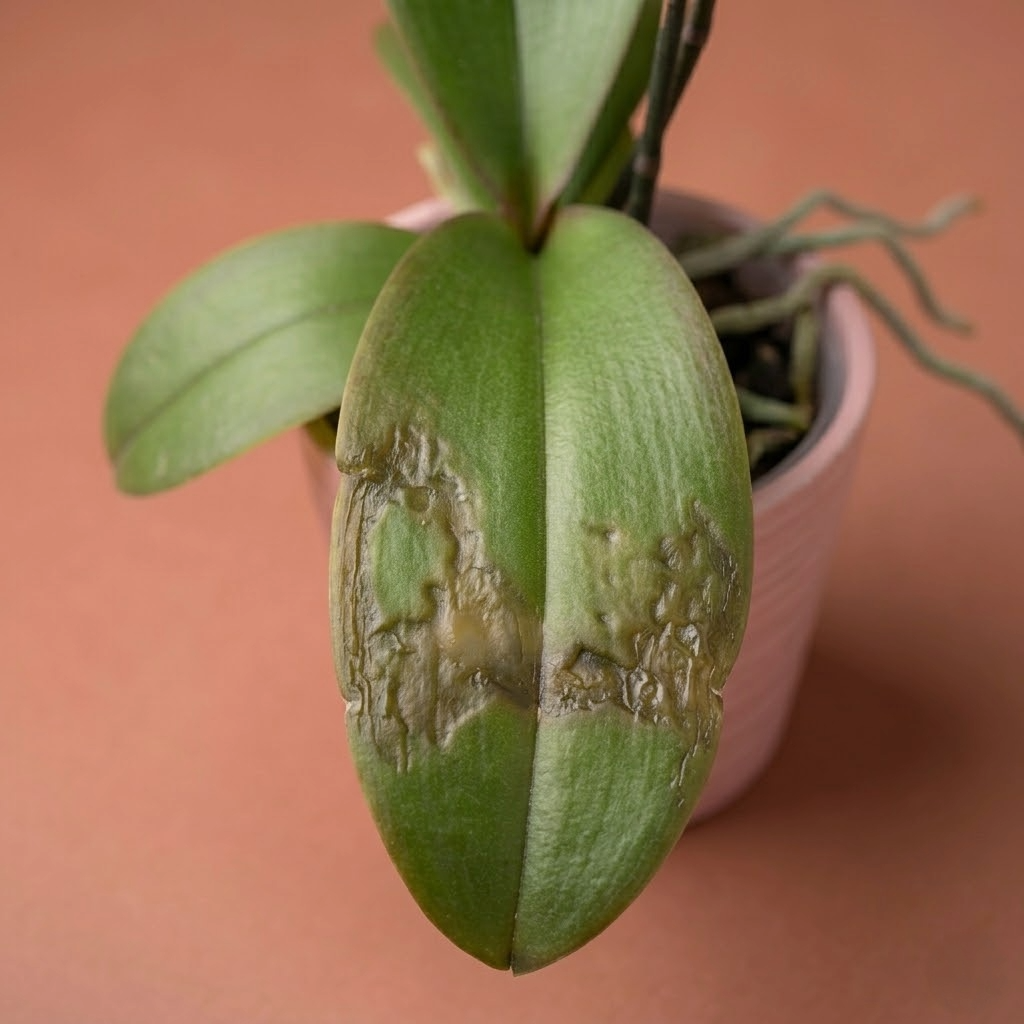
This is Bacterial Soft Rot (Erwinia). In the orchid world, this is an emergency, because it is caused by bacteria, it can destroy a plant in 24–48 hours if left untreated.
The “Emergency” SOP
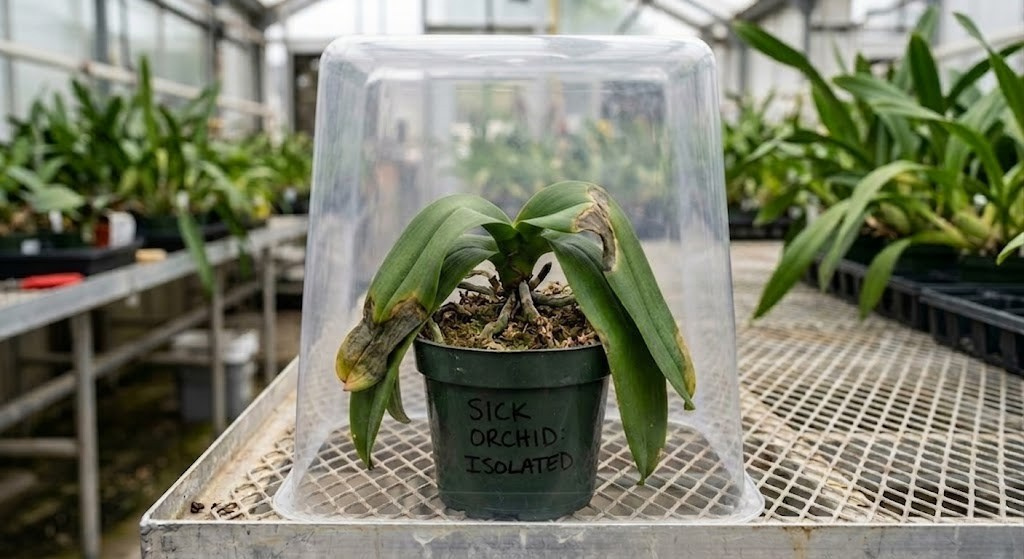
1. Isolate the plant: Bacteria spread through water splashes. Move the infected orchid away from your collection and keep the area dry.
2. Sterilize Your Tools: Use a blade or shears sterilized with 70% isopropyl alcohol or flame.
3. Perform the Cut: Cut off the infected leaf tissue.
Crucial Tip: You must cut at least 1 inch into the healthy, green tissue to ensure no bacteria remain.
4. Seal the Wound: Dust the fresh cut with cinnamon powder (a natural fungicide/desiccant) or use a specialized bactericide like Physan 20.
Why Did This Happen?
Based on my experience in the orchid trade, Soft Rot usually thrives in three conditions:
- Stagnant Water: Water trapped in the “crown” or leaf axils overnight.
- Poor Airflow: Lack of ventilation allows bacteria to settle and multiply.
- High Humidity + Heat: The perfect breeding ground for pathogens.
Pro-Tips for Prevention
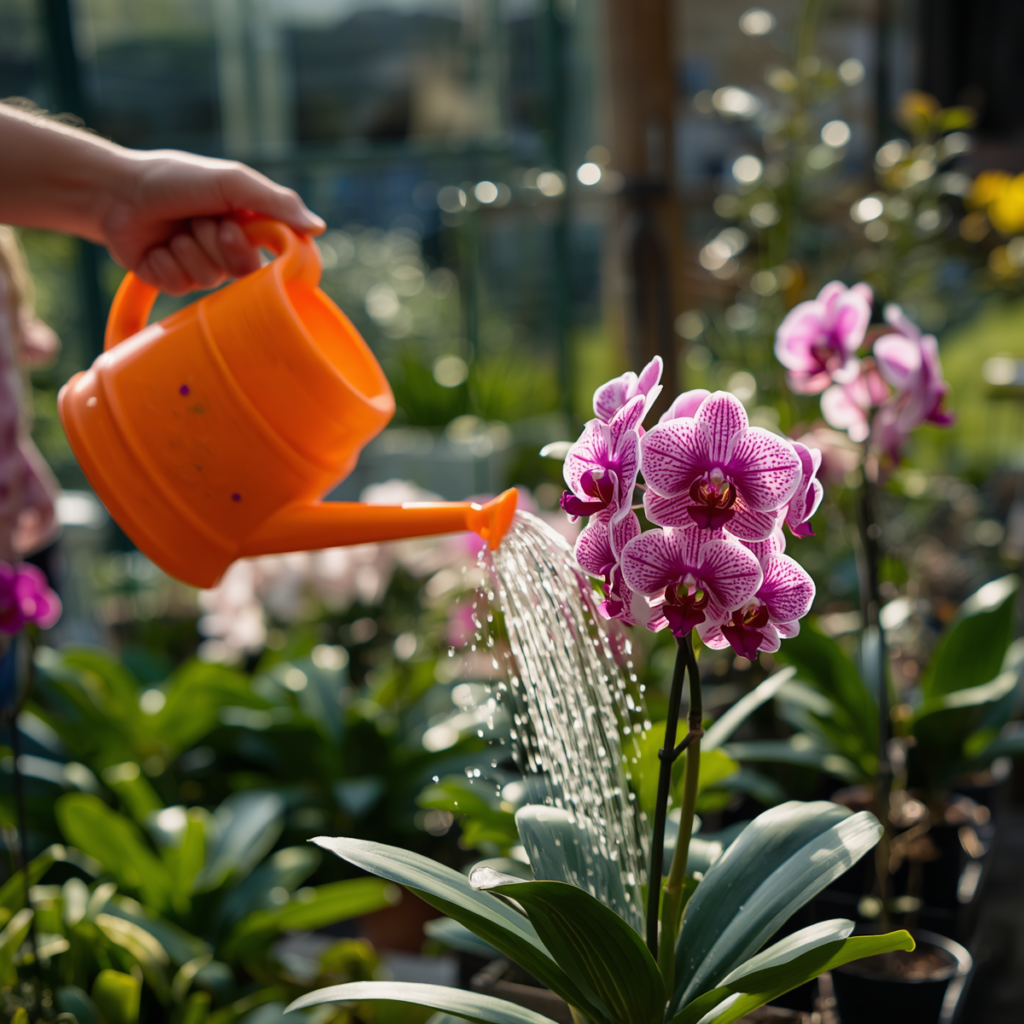
Water in the Morning: This ensures that any stray droplets on the leaves evaporate before sunset.
The “Fan” Method: Always ensure there is a light breeze in your growing area. If you grow indoors, a small oscillating fan makes a world of difference.
Prevention is always easier than surgery.
Want to keep your Phalaenopsis thriving day after day?
For less than the price of a coffee, download our Phalaenopsis Care Checklist for just $2.99.
Get a simple, beautifully curated daily routine to monitor your orchid’s roots, leaves, and watering with zero guesswork!
Leave a Reply